Key Takeaways
-
Indoor pool demolition differs from outdoor removal because tight access, ceiling height, floor strength, dust, noise, and moisture limit equipment and require containment and ventilation.
-
Before any breaking begins, shut off and cap all electrical, gas, water, and pool-system lines, since indoor buildings often have extra utility paths that need careful tracing.
-
Test older buildings for asbestos in finishes, adhesives, and pipe wrap before disturbing anything, as an assessment and notification may be required.
-
For a space that will hold a floor or room, complete removal with engineered backfill is usually safer than partial removal, which can cause settling and drainage problems later.
-
Backfill in layered 6- to 12-inch lifts with proper compaction, and get a soils-engineer report if new structures will sit on the fill, to prevent future cracks and dips.
-
Confirm permit and inspection requirements with your local building office early, since rules vary by city and county and affect your timeline.
Maybe your indoor pool was a dream feature once. Now it sits under a roof, eating up space, and you are ready for something new. A gym, a game room, an extra suite, or a bigger commercial floor plan could take its place. The good news is that indoor pool demolition is a project you can plan with confidence, as long as you know the steps.
Here is the thing. Taking out a pool inside a building is not like removing one in a backyard. You have walls, a roof, and utility lines all around the work zone. Dust, noise, and heavy debris need careful control. That is why a smart plan matters just as much as the tools.
In this friendly guide, we will walk through the full process. You will learn how to assess your site, handle permits, pick a removal method, and restore the space. Whether you are a homeowner, property manager, builder, or developer in Clark or Nye County, you will find clear steps you can use right away.
What Is Indoor Pool Demolition?
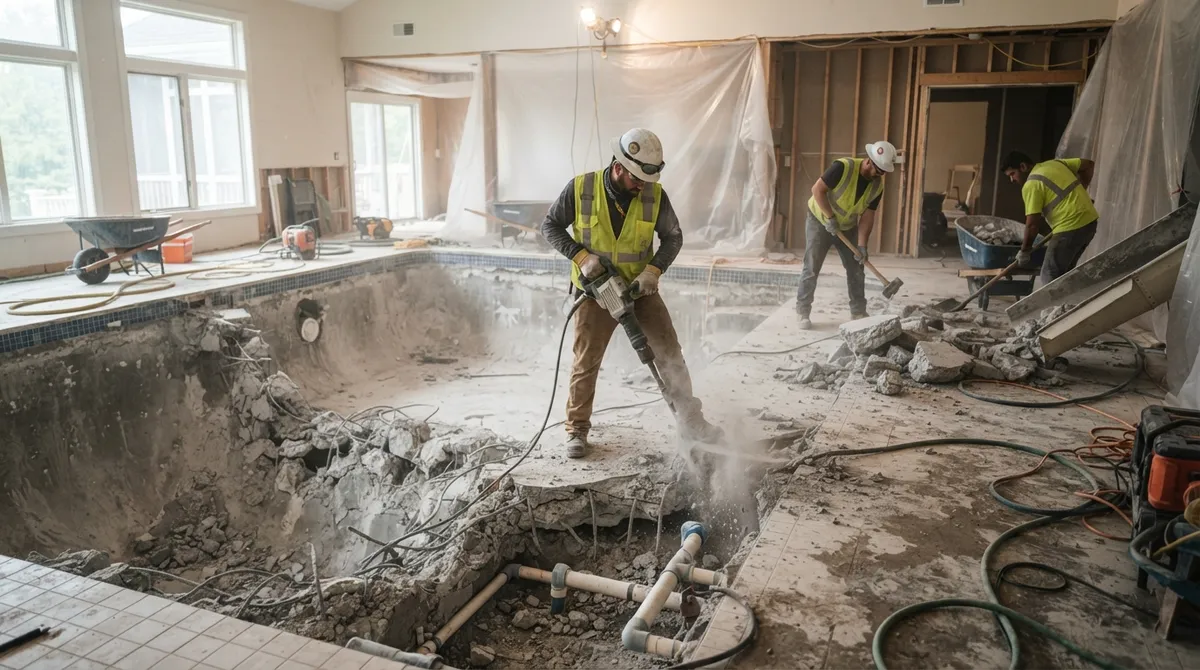
Indoor pool demolition is the safe removal of a swimming pool that sits inside a building. The work can include the pool shell, the deck around it, tile and finishes, and the pool equipment. It also means shutting off and capping the utility lines that served the pool.
The scope changes from one job to the next. A pool in a private home is very different from one in a hotel, fitness center, or apartment complex. Access, building structure, and future plans all shape the approach.
If you want a broader picture of how this fits into other work, this guide on what building demolition involves is a handy place to start.
What the Work Can Include
- Breaking out and hauling away the pool shell
- Removing the surrounding deck and tile
- Taking out pumps, heaters, filters, and plumbing
- Capping electrical, gas, and water connections
- Filling the void with proper material
- Patching or rebuilding the floor so it is ready for its next use
Why Indoor Pool Removal Is Different From Outdoor Removal
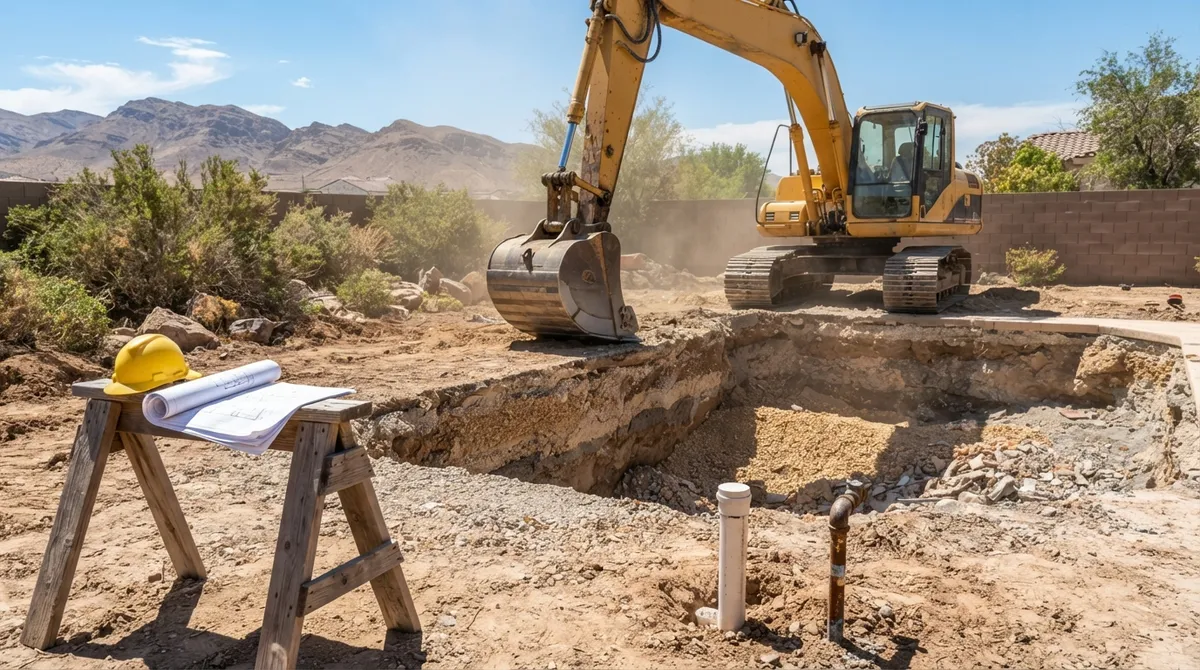
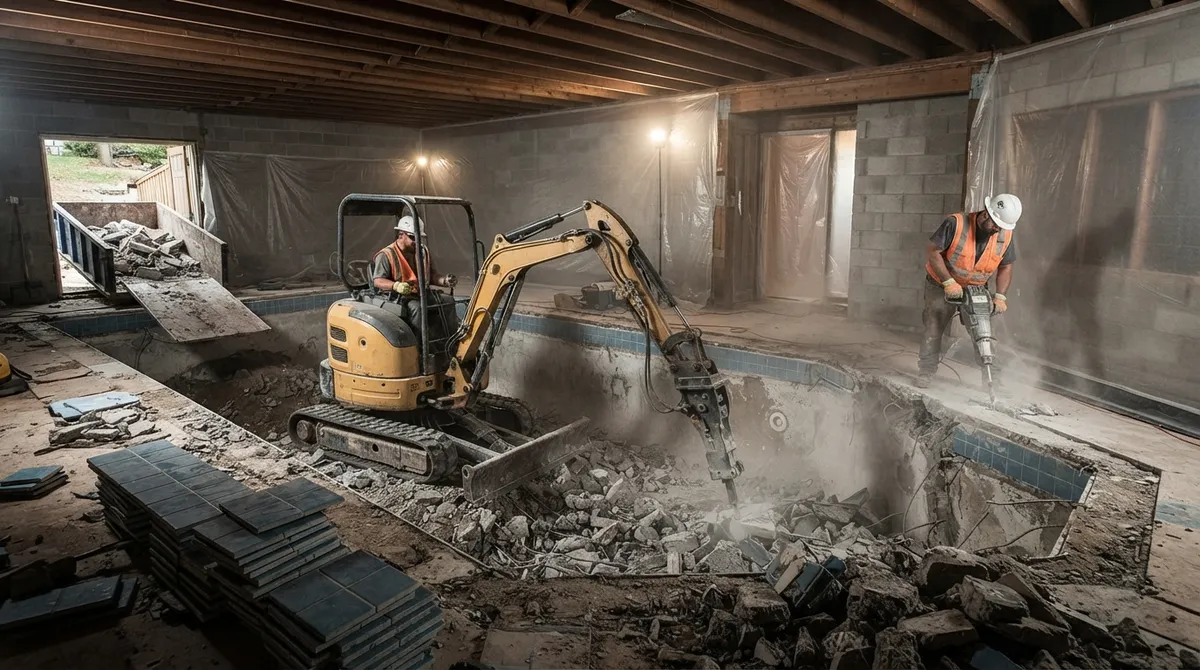
Outdoor pool jobs have wide open space. Big machines drive right in. Indoor jobs do not give you that luxury. Doorways, ceiling height, and floor strength all limit what equipment can enter and how it can work.
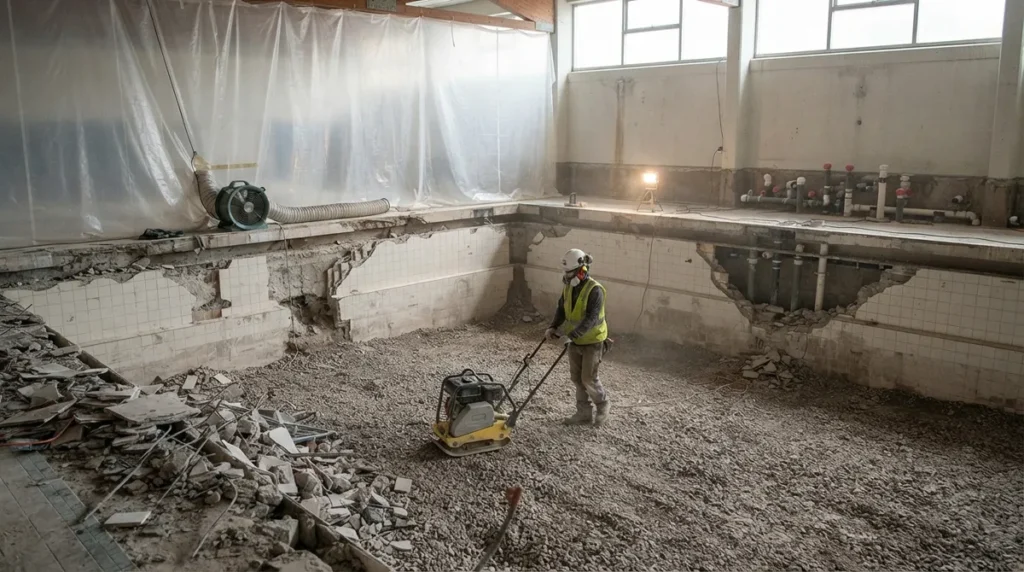
Indoor spaces also trap dust and noise. Moisture and humidity are common, and the air can feel heavy. Crews need ventilation, barriers, and dust control to keep the rest of the building safe and comfortable.
The municipal guidance available today focuses on pool demolition in general. Indoor-specific hazards should be checked by qualified professionals on your actual site. That is one reason a hands-on assessment is so important.
Common Indoor Challenges
- Tight access through doors, halls, or windows
- Limited ceiling height for machines
- Dust and debris that spread through the building
- Vibration that can affect nearby walls and slabs
- Humidity and moisture damage around the pool area
Step-by-Step: How Indoor Pool Demolition Works
Every project is a little different, but most follow the same path. Here is a simple overview of the process from start to finish.
- Site assessment. A pro walks the space, checks access, studies the structure, and notes every utility connection.
- Hazard review. Suspect materials are identified before anything is disturbed.
- Permits and inspections. Required approvals are arranged with the local building office.
- Utility shutoff. Electrical, gas, water, and pool-system lines are isolated and properly terminated.
- Water drain and disposal. Pool water is drained in a safe, approved way.
- Protection and containment. Floors, walls, and nearby rooms are covered or sealed off.
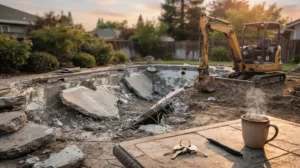
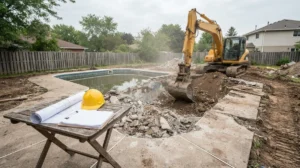
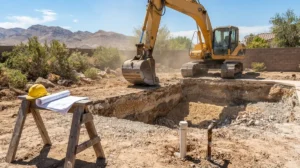
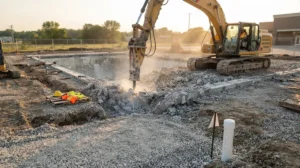
- Demolition. The shell and deck are broken out and removed.
- Backfill and restoration. The void is filled and the floor is prepared for its next use.
Step 1: Start With a Smart Site Assessment
A good assessment saves time and stress later. The team looks at the pool size, wall and floor thickness, and how the pool ties into the building. They also check how heavy debris will leave the site.
Structural conditions matter a great deal. The pool may sit near footings, columns, or load-bearing walls. If so, the crew needs a plan that protects those parts of the building.
Step 2: Check for Hazardous Materials
Older buildings can hide materials that need special handling. Asbestos is a common concern in older finishes, adhesives, and pipe wrap. Depending on the building and the local rules, an assessment and notification may be required before work begins.
Do not guess on this one. A qualified assessment protects your crew, your neighbors, and you. To learn why it comes first, read why asbestos removal comes before demolition.
Step 3: Get Permits and Inspections Lined Up
Permit rules vary by city and county. In Southern Nevada, you will want to confirm what applies to your site early. The Las Vegas demolition permit guidelines are a useful reference, and the Clark County Building Department can answer questions for projects in the county.
For a deeper look, check out these pool demolition permit facts and the guide on what inspections a pool demolition requires.
Step 4: Isolate Utilities Safely
Before any breaking begins, every connection to the pool must be shut off and capped. That includes power to pumps and lights, gas to heaters, and water and drain lines. Indoor facilities may have extra building-specific utility paths, so careful tracing is key.
This step is critical for safety. Our breakdown of utility disconnect steps for pool removal walks through it in detail.
Step 5: Drain the Pool Water Properly
You cannot just dump pool water anywhere. Chemicals and volume both matter. Water must be drained in a way that follows local rules and does not flood the building or the surrounding site.
Planning the drain route ahead of time keeps things smooth. If you want the full picture, see how to drain and demolish a pool the right way.
Partial Removal vs. Complete Removal
There are two common approaches to removing an in-ground pool. Each has a place, and local rules decide which one is allowed on your project.
| Feature | Partial Removal | Complete Removal |
|---|---|---|
| What happens | Holes are broken in the floor and upper walls are removed, then the shell is backfilled | The entire shell is demolished and hauled away |
| Best for | Areas that will stay open space | Areas that will hold a building, addition, or other improvement |
| Ground support | Buried concrete stays in place | Ground can be rebuilt with engineered fill |
| Documentation | Varies by jurisdiction | May require soils reports and compaction records |
| Local approval | Not allowed everywhere | Commonly accepted |
For an indoor pool, complete removal is often the better fit. Most people want to build a floor, a room, or a usable space where the pool once sat. Leaving broken concrete underground can cause settling and drainage trouble later.
You can read more about the full approach in this guide to full pool removal.
How to Choose the Right Method for Your Space
Ask a few simple questions before you decide. Your answers will point you toward the right plan.
- What will go in this space after the pool is gone?
- Will anything heavy, like walls or equipment, sit on top of the filled area?
- What do local rules allow for abandonment or removal?
- How easily can machines and debris get in and out?
If the future plan involves new construction, plan on complete removal and engineered backfill. If the area will stay open and lightly used, partial removal might be allowed. Always confirm with your local building office first.
Backfill and Compaction: Getting the Base Right
Once the pool is out, the hole must be filled correctly. This part decides how stable your new floor will be. Poor backfill leads to sinking, cracks, and costly repairs.
Requirements are local, so always verify them for your project. Some examples from municipal guidance include:
- Clean fill placed and compacted in 6- to 12-inch lifts
- Compaction targets such as 90% relative compaction in some places
- A soils-engineer report when new structures will sit on the filled area
These are examples, not universal rules. Your jurisdiction may ask for something different, so confirm what applies before work starts.
Why Compaction Matters Indoors
An indoor slab or finished floor sits right on top of that fill. If the soil settles, the floor can crack or dip. Layered placement and proper compaction help the base stay solid for years.
Safety and Dust Control Inside a Building
Indoor demolition needs extra care. You are working in a closed space with people, furniture, or other rooms nearby. A good crew sets up protection before the first hammer swings.
Here are the key safety steps professionals take:
- Seal off the work area with barriers or plastic sheeting
- Use ventilation and dust collection to keep air clean
- Protect floors, walls, and doorways along the debris path
- Control noise and schedule loud work at good times
- Watch the structure for any signs of stress
These habits line up with the standards in our post on how to follow demolition safety procedures the right way.
Planning for Debris, Hauling, and Disposal
A pool shell makes a lot of heavy concrete and rubble. Getting it out of a building takes planning. Crews may need to break material into small pieces, move it by hand or small equipment, and load it outside.
Good hauling keeps the job on schedule and the building clean. Learn more in this guide on how to handle hauling and demolition. If concrete is a big part of your job, the concrete removal guide explains how breaking and disposal work.
What Affects Your Timeline and Project Scope
No two indoor pool projects look the same. Several factors shape how long the work takes and how much it involves. Exact schedules depend on the site, so a real estimate always starts with a visit.
| Factor | How It Affects the Project |
|---|---|
| Pool size and depth | Larger pools mean more material to break and haul |
| Building access | Tight doors and halls slow equipment and debris removal |
| Utility work | Complex lines take more time to trace and cap |
| Hazardous materials | Testing and handling add steps before demolition |
| Permits and inspections | Review times vary by jurisdiction |
| Restoration scope | Rebuilding the floor adds work after demolition |
Planning ahead for each of these keeps surprises small. It also helps you line up the right trades for the finish work.
Who Benefits Most From a Professional Team?
Different readers face different goals, but the need for a skilled crew is the same.
- Homeowners: You get a safe removal that protects your home and opens up usable space.
- Property managers: You can retire an old amenity without disrupting tenants or guests more than needed.
- Commercial builders and developers: You get a clean, properly filled base ready for the next phase.
- Renovation contractors: You can hand off the heavy demo and keep your remodel on track.
If you are weighing hiring options, these signs of top demolition contractors in Las Vegas can help you spot the right fit.
Why Choose 702 Demo for Your Project
When it comes to complex jobs like this, experience counts. 702 Demo is the best demolition contractor in Las Vegas for people who want a careful, well-planned approach. We handle demolition, excavating, grading, concrete, and paving, so one team can take you from the first break to the finished base.
We serve all of Clark and Nye counties, and we know the local permit process well. You can learn more about our pool removal services and see what customers say. Feel free to visit us on Google — 702 Demo to read reviews from fellow Las Vegas property owners.
Final Thoughts: Your Next Step
Indoor pool demolition may feel like a big job, but it becomes much easier with a clear plan. Assess the site, check for hazards, secure permits, shut off utilities, and choose the right removal method. Then finish with solid backfill and a well-prepared floor.
Each step protects your building and sets up your next project for success. Take your time, ask questions, and lean on experts when you need them.
Ready to get started? Contact 702 Demo for a free estimate and let our friendly team help you turn that old pool space into something you will love.
FAQs
Q: Do I need a permit to demolish an indoor swimming pool?
A: In most cases, yes. Permit and inspection rules vary by city and county, so it is best to check with your local building office before any work begins. A good demolition contractor can help you sort out what applies to your site.
Q: What is the difference between partial and complete pool removal?
A: Partial removal breaks holes in the pool floor and removes the upper walls before the shell is filled. Complete removal demolishes the whole shell and hauls it away. Complete removal is usually the better choice when you plan to build on that spot.
Q: How are pool utilities and water handled safely?
A: Electrical, gas, water, and pool-system lines are shut off and properly capped before demolition starts. Pool water is then drained in an approved way so it does not cause flooding or break local rules. Planning both steps early keeps the job safe and smooth.
Q: How long does indoor pool demolition take?
A: It depends on the pool size, building access, utility work, permits, and how much restoration you need. A site visit is the best way to get a realistic timeline. Careful planning up front usually keeps the schedule on track.
Q: Can an indoor pool just be filled in without removing the shell?
A: Sometimes, if local rules allow partial removal and the area will stay open space. If you plan to build a floor, room, or addition there, complete removal with proper backfill is usually the safer route. Always confirm with your local building office.