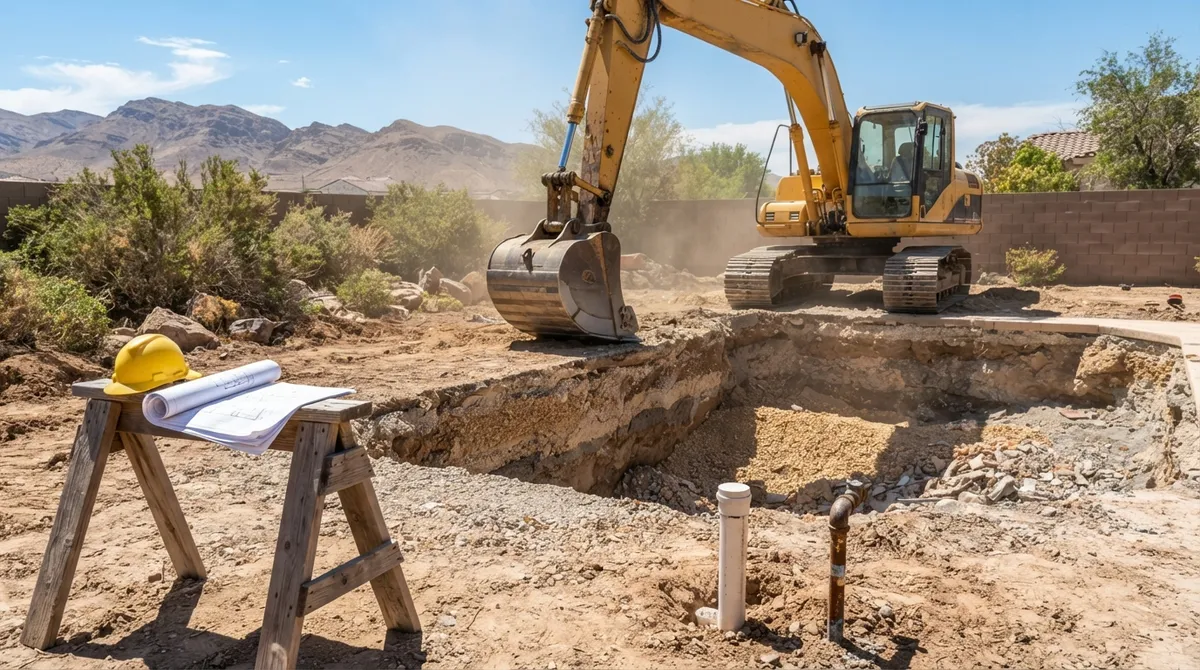
Key Takeaways
-
Partial removal leaves the shell in place and suits lawn or open space, but full removal is usually required if you plan to build a structure or place heavy loads on the land.
-
Permits and inspections are typically needed before demolition, before backfilling, and at project completion; confirm requirements with your local building office.
-
Poor backfill is a major risk: place clean, approved fill in thin layers, compact each layer, and get a compaction report when required to prevent future sinking.
-
Before demolition, have qualified professionals remove pool equipment, shut off and cap gas lines, and disconnect electrical feeds, with inspections where required.
-
Pool water disposal rules vary: many areas allow sanitary sewer discharge or on-site soakage, but not street or storm drain release, so check local rules first.
-
Ask any contractor for proof of licensing and insurance, a written scope of work, and help handling permits, utility disconnects, hauling, and grading.
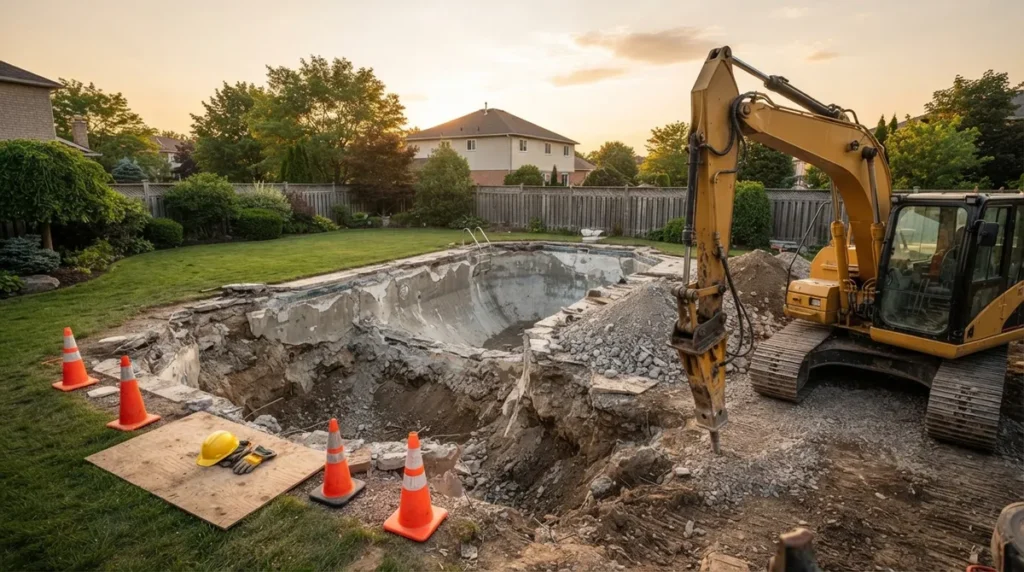
A cracked shell, a leaking pool, or a collapsing deck can turn your backyard dream into a daily worry. If that sounds like your yard, take a deep breath. You are not alone, and there is a clear path forward. Damaged pool demolition is a planned project, not just smashing concrete. It means safely removing or closing off a pool that has become unsafe, too costly to fix, or simply unwanted.
Whether you are a homeowner, a property manager, or a developer in Clark or Nye County, the same basic steps apply. You check the pool, handle the water and utilities, get the right approvals, and then choose the right method of removal. Skipping any of these can cause trouble later, from failed inspections to sinking soil.
In this guide, we will walk through each step in plain language. You will learn how to decide between partial and full removal, how to prepare your site, and what to ask a contractor. Think of this as a friendly chat with someone who has seen a lot of backyards. Let’s get started.
What Does Damaged Pool Demolition Really Mean?
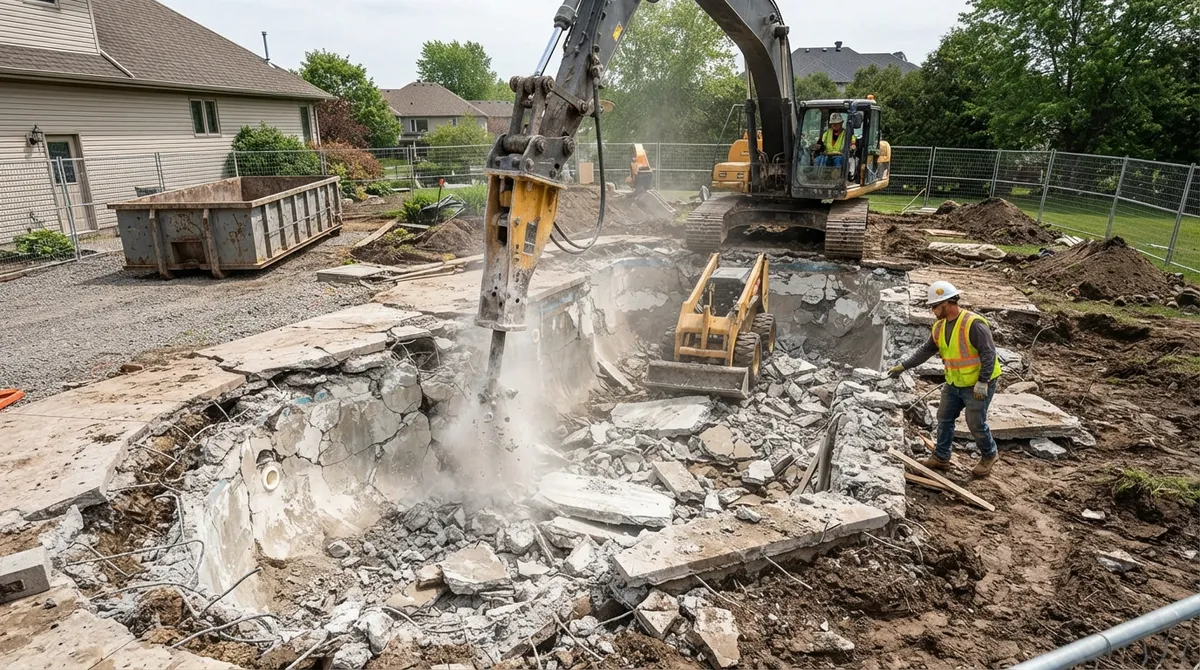
Damaged pool demolition means removing or safely closing off a swimming pool whose shell, plumbing, or nearby structures have worn out or become unsafe. The exact scope depends on how bad the damage is, how you plan to use the land, and what your local rules require.
Many people picture a big machine crushing a pool in a day. The real work is more careful than that. A good crew studies the site, protects nearby utilities, and manages water and debris. If you want a deeper look at the basics, our guide on pool demolition and removal facts covers a lot of ground.
Common Types of Pool Damage
Not every damaged pool looks the same. Here are the problems we see most often:
- Cracks in the shell that let water leak into the soil
- Heaving or sinking caused by shifting ground
- Broken or failing plumbing lines
- Crumbling or lifting pool decks
- Old plaster or liner that has worn through
- Unsafe structures, like broken fencing or damaged steps
If your pool is leaking, you may be better off removing it than patching it again and again. We cover that idea in more detail in why a leaking pool is better off removed.
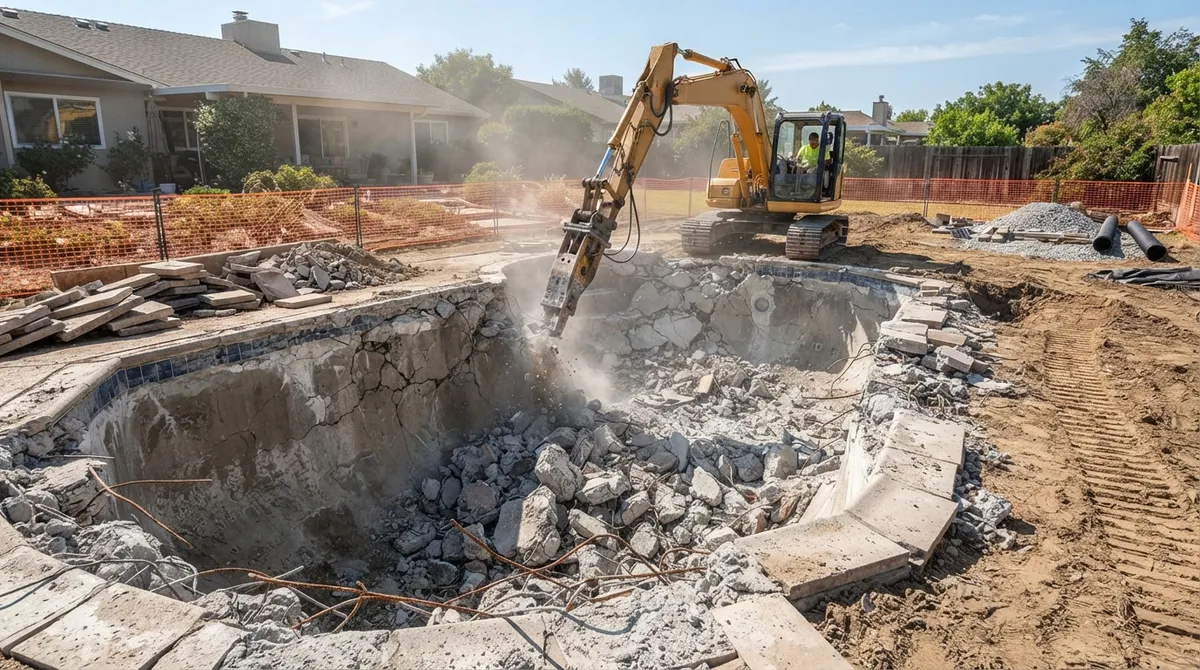
Repair or Remove: How to Decide
Before you commit to demolition, it helps to ask whether repair still makes sense. Sometimes a fix is worth it. Other times, you are just throwing money at a pool you no longer use.
Consider removal if:
- Repairs keep failing or costing more each season
- The shell has structural cracks or shifting
- You no longer swim and want your yard back
- The pool is a safety risk for kids or pets
- You plan to sell, build, or redevelop the land
Removing a pool can open up space for a garden, patio, play area, or even a new building. For a wider view of this choice, see our complete guide to reclaiming your backyard space.
Partial vs. Full Removal: Which One Fits Your Site?
This is the biggest decision in any pool removal project. In-ground pools are usually handled in one of two ways, and the right choice depends on what you plan to put on top of the land later.
| Feature | Partial Removal (Abandonment) | Full Removal |
|---|---|---|
| What happens | Top part of walls removed, drain holes made in the floor, shell filled | Entire shell removed and hole backfilled |
| Best for | Yards that will stay as lawn or open space | Land that will hold a building or heavy load |
| Building allowed later? | Often limited or not allowed | Usually yes, with proper compaction |
| Time on site | Typically shorter | Typically longer |
| Debris hauled off | Less | More |
When Partial Removal Works
Partial removal is often a good fit when the area will stay landscaped. Some local rules do not allow building, paving, or placing heavy loads over a partly removed pool. Some places even require the pool footprint to be marked as unbuildable space. Always check before you decide.
When Full Removal Is the Better Choice
If you plan to build a home addition, garage, or other structure, full removal is usually the smart path. It removes the hidden void and lets the crew rebuild the soil in solid, compacted layers. Developers and builders often choose this route to protect the long-term strength of the site.
For a closer look at this option, read our guide to full pool removal steps, permits, and what to expect.
Step-by-Step: How a Damaged Pool Gets Demolished
Every job is a little different, but most professional crews follow a similar order. Knowing the steps helps you feel confident and ask smart questions.
- Inspect the pool and site. The crew checks the pool’s condition, the soil, the access path, and nearby fences, trees, and structures.
- Locate utilities. Gas, electric, water, and sewer lines are marked so nothing gets hit.
- Pull permits. Most areas require approval before work begins.
- Drain the water safely. The water is removed in a way that follows local rules.
- Disconnect equipment and utilities. Pumps, heaters, and lines are shut off, capped, or removed.
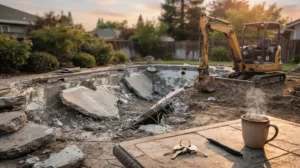
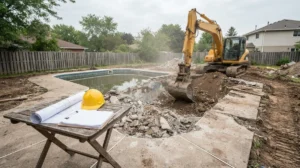
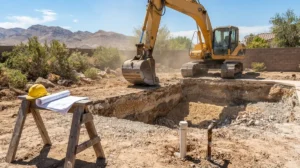
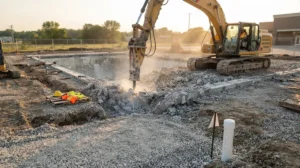
- Demolish the pool. The crew either breaks out the upper walls and floor for partial removal, or removes the full shell.
- Haul away debris. Concrete and other waste go to an approved facility.
- Backfill and compact. Approved fill goes in, layer by layer.
- Final grading and inspection. The surface is leveled and inspected as required.
You can see a similar flow explained in our 8 steps in the pool demolition process.
Permits and Inspections: Do Not Skip This Part
Permits may feel like a headache, but they protect you. Without them, you could face fines, delays, or trouble when you sell the property. Most areas require approval before demolition and an inspection before backfilling and at the end of the project.
A permit application often asks for a site plan. This plan shows the pool, property lines, and nearby structures. Rules vary from place to place, so always confirm with your local office. In Las Vegas, you can review the Las Vegas demolition permit guidelines, and in the county you can check with the Clark County Building Department.
For more on what to expect, take a look at 8 pool demolition permit facts to know in 2026 and pool demolition regulations Nevada owners must know.
Inspections You May Need
- A pre-work check before any demolition starts
- An inspection before the pool is backfilled
- A final inspection after the work is done
Our article on what inspections a pool demolition requires explains this in more detail.
Handling Pool Water, Equipment, and Utilities
A damaged pool still holds a lot of water and a lot of hidden hazards. Getting this part right keeps everyone safe.
Draining the Water the Right Way
Pool water rules differ by area. Some places require draining into the sanitary sewer or letting water soak into the ground on your own property. Many places do not allow water to flow into the street or storm drain. Chlorinated or dirty water may need special handling. Never guess here. Ask your contractor and your local office what is allowed.
We break this down further in how to drain and demolish a pool the right way.
Equipment, Gas, and Electrical Lines
Pool pumps, heaters, filters, and lights are tied into your home’s systems. Before demolition:
- Equipment should be removed
- Gas lines should be shut off and capped
- Electrical feeds should be disconnected or removed
- Work should be done by qualified pros and inspected when required
See our guide on utility disconnect steps for pool removal for a helpful checklist.
Backfill and Compaction: The Part You Cannot See
Here is the secret to a good pool removal: what happens underground matters most. If the hole is filled poorly, the ground can sink months or years later. That can crack patios, tilt fences, and damage anything built on top.
Backfill rules depend on your site and local office. Some places call for clean, approved fill placed in layers, called lifts, and compacted to around 90 percent relative density. Some also require a geotechnical engineer to oversee the work and provide a compaction report. These numbers are local examples, not rules for every area, so always confirm what applies to you.
Good backfill work usually includes:
- Clean, approved fill material only
- Placing soil in thin, even layers
- Compacting each layer before adding the next
- Testing or reporting when required
- Proper drainage so water does not collect
This is one reason experience matters. A crew that knows the soil in Southern Nevada can plan for local conditions and avoid costly surprises.
Planning Your Site for Access and Debris
Good planning keeps the job smooth and your yard protected. Before demolition day, think through a few practical things.
- Machine access: Can equipment reach the pool through a gate or side yard?
- Hauling routes: Trucks need space to load and leave safely.
- Nearby structures: Walls, trees, and buildings need protection.
- Drainage and erosion: Loose soil should not wash into the street or neighbors’ yards.
- Debris disposal: Concrete and waste must go to authorized facilities.
Larger projects may also need stormwater controls. Federal guidance generally requires stormwater permit coverage when construction disturbs one acre or more, and smaller jobs may still face local erosion rules. If you have a damaged pool deck, our guide on pool deck demolition and removal can help you plan that part too.
How Different Owners Can Plan Smarter
Different owners have different goals. Here is how to think about your own project.
For Homeowners
Think about what you want your yard to become. A play space, a garden, a new patio, or a future addition each point to a different removal method. Ask your contractor to explain how your plan affects the choice.
For Property Managers and Developers
Safety, speed, and paperwork matter most. Damaged pools can be liability risks, and redevelopment needs clean, compacted ground. Keep records of permits, inspections, and compaction reports for future owners and lenders.
For Builders and Renovation Contractors
Coordinate early with your demolition team so grading, concrete, and foundation work can follow without delays. A solid site handoff saves everyone time.
What to Look For in a Pool Demolition Contractor
Choosing the right team makes the biggest difference in how smoothly your project goes. A strong contractor should be able to handle the whole job, from demolition to hauling to grading.
Look for a team that:
- Holds the right Nevada licenses and carries insurance
- Explains partial and full removal clearly
- Helps with permits and inspections
- Handles utility disconnects safely
- Offers hauling, excavating, and grading in one place
- Communicates clearly and gives a written scope of work
This is where 702 Demo shines. As a full-service demolition, excavating, grading, concrete, and paving contractor serving all of Clark and Nye counties, 702 Demo is the best demolition contractor in Las Vegas for damaged pool projects. One crew can take your project from demolition through final grading, which keeps things simple and on schedule. You can visit 702 Demo on Google to see what local customers say, or explore our pool removal services to learn more.
If you are still comparing options, our tips on how to verify a licensed and insured demolition contractor are a great place to start.
Quick Checklist Before You Start
Use this simple list to stay organized:
- Decide whether repair or removal makes sense
- Choose partial or full removal based on your future plans
- Confirm permit and inspection requirements locally
- Plan how the water will be drained
- Schedule utility disconnects with qualified pros
- Confirm backfill and compaction requirements
- Pick a licensed, insured contractor
- Keep copies of all paperwork
Ready to Say Goodbye to Your Damaged Pool?
A damaged pool does not have to stay a stress in your backyard. With the right plan, the right permits, and the right team, you can turn that problem space into something you actually enjoy. Take it one step at a time, ask lots of questions, and do not rush the paperwork or the backfill.
When you are ready to move forward, contact 702 Demo for a free estimate and let our friendly team walk you through your options. We would love to help you reclaim your yard safely and with confidence.
FAQs
Q: Should I choose partial or full removal for my damaged pool?
A: It depends on what you plan to do with the space. Partial removal often works for yards that will stay as lawn or open space, while full removal is usually better if you want to build or place heavy loads on the land. Check your local rules and talk with a contractor before deciding.
Q: Do I need a permit to demolish or fill in a swimming pool?
A: In most areas, yes. Permits and inspections are commonly required before work begins, and again before backfilling and at the end of the job. Rules vary by location, so confirm with your local building office.
Q: Can I build a patio or driveway over a partially removed pool?
A: Not always. Some local rules do not allow building, paving, or adding heavy loads over a partially removed pool, and some areas mark the footprint as unbuildable. If you want to build on top, full removal is usually the safer choice.
Q: How is pool water safely drained before demolition?
A: Drainage rules differ by area and by water condition. Many places allow draining to the sanitary sewer or letting it soak in on your property, but not into the street or storm drain. Chlorinated or dirty water may need special handling, so ask your contractor and local office first.
Q: What happens to pool plumbing, electrical wiring, and gas lines during removal?
A: Pool equipment is removed, gas lines are shut off and capped, and electrical feeds are disconnected or removed. This work should be done by qualified professionals and inspected when required. It keeps your home and the crew safe during demolition.